
You shave, you moisturise, you do everything right, and your legs still have those tiny dark dots scattered across them like someone sprinkled pepper on your skin. Does that sound familiar? That’s what most people refer to as strawberry legs, and no, it has nothing to do with how clean you are.
It is one of the most common reasons people enquire about laser hair removal, and it is also one of the most misunderstood skin concerns. Let's take a closer look at what really causes those dark dots, why they show up, and whether laser hair removal can actually make a difference; what's going on under the surface, why it happens, and whether laser hair removal is really the fix everyone claims it to be.
What Are Strawberry Legs?
Strawberry legs are not a medical condition. They are simply a name for the appearance of the skin when little dark dots appear on the lower legs, sort of like the seeds of a strawberry. Thus the name.
What is actually happening underneath is a little less cute. Those dots are open comedones, which is just a fancy way of saying pores clogged with oil and dead skin and sometimes bacteria. A hair follicle sitting inside one of those clogged pores darkens the opening even more, and that's why the dots show up so clearly on lighter skin and can look raised or textured on darker skin tones.
Anyone can develop strawberry legs, although they're often more noticeable on some people than others. Some people just notice it more, usually because their hair is thicker or there's more contrast between the hair and the skin around it.
One of the biggest misconceptions is that strawberry legs are caused by poor hygiene: it's not a hygiene issue. You can wash your legs three times a day and it won't go away, because dirt sitting on top of the skin isn't the problem. It's what's happening inside the follicle. Once you understand what's happening beneath the skin, it becomes much easier to choose the right treatment; it's a lot easier to stop wasting time scrubbing and actually go after the real cause.
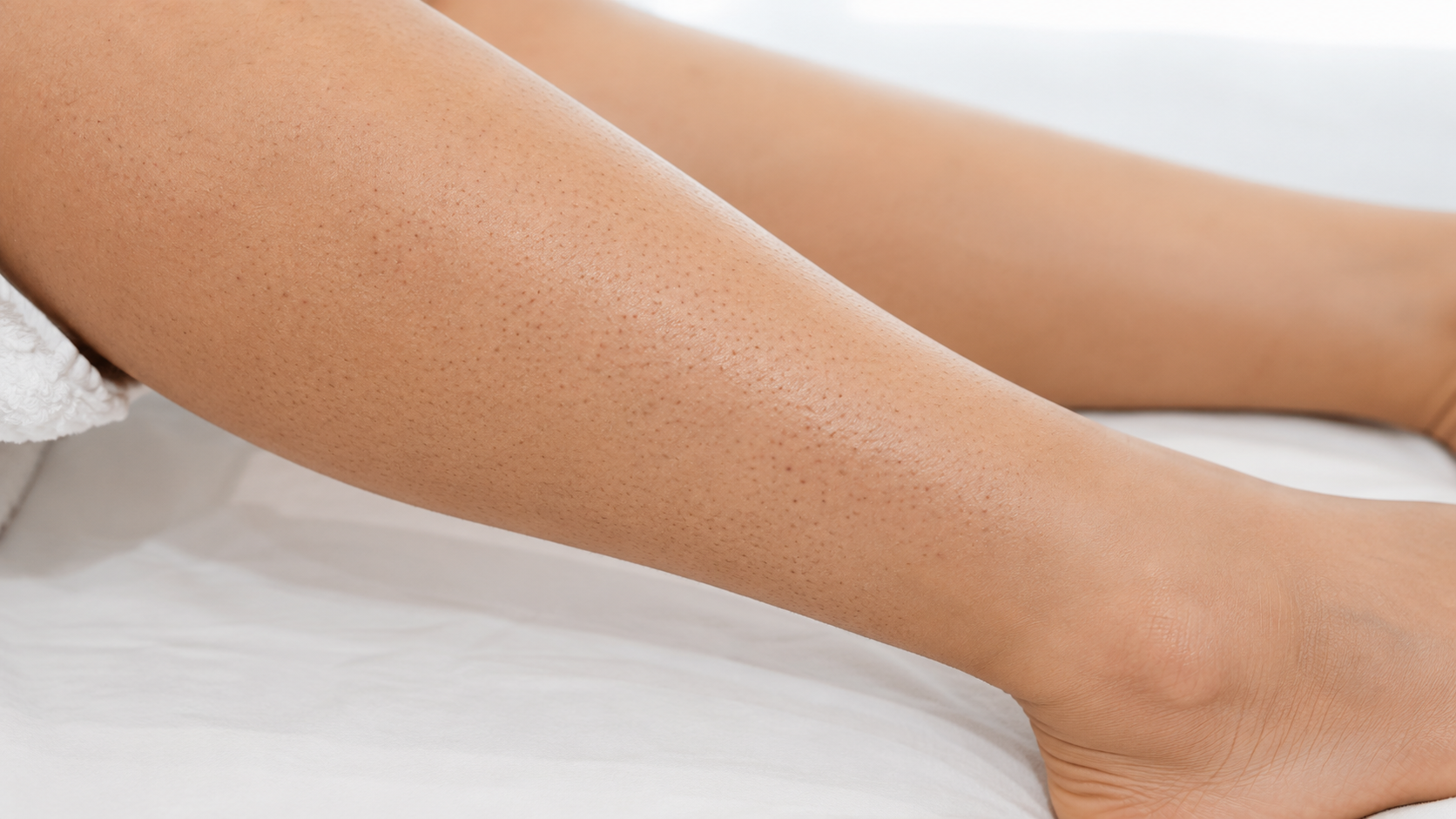
Close-up of strawberry legs showing visible dark pores on lower legs
What Causes Strawberry Legs?
Usually it's not just one thing. It's a few things piling up on each other at once.
Shaving is a big one, especially dry shaving or using a dull blade. It doesn't cut hair cleanly, and it leaves behind tiny micro-tears and irritation that make pores look darker the more you do it.
Then there's folliculitis and keratosis pilaris, or KP for short. Folliculitis is basically inflammation of the hair follicle. KP happens when keratin, a protein your skin naturally makes, builds up and clogs the follicle opening. Both can look almost identical to strawberry legs, which is part of why people mix them up.
And hair density plays a role too. Thicker, coarser leg hair needs a wider follicle to grow through, so naturally, that pore is going to be more visible.
The good news is that none of these causes mean there's anything wrong with your skin. They're all common and, in many cases, manageable. It's just how hair, pores, and texture interact, and honestly, most people deal with some version of it.
More often than not, a couple of these causes overlap at the same time. Someone with naturally coarse hair who also shaves dry with an old razor is working against their skin from two directions at once. That's exactly why switching razors or trying a fancier shaving cream rarely fixes it completely. The real problem is happening below the surface, at the follicle, somewhere a topical product just can't reach.
Does Laser Hair Removal Actually Help?
In many cases, yes. Here's why laser hair removal can help.
Laser treatment goes straight for the hair follicle and gradually thins out the hair growing from it. As the hair gets finer, the follicle doesn't need to stretch open as wide anymore, so the pore itself starts looking smaller and less obvious.
Many people notice their skin becoming smoother as treatment progresses, with fewer visible dark dots and less irritation from shaving. The dots fade, the skin feels smoother, and the texture looks more even overall. It doesn't happen in one visit, though. It builds gradually, appointment by appointment, as the follicle responds.
One thing worth being honest about: laser mainly helps by tackling the hair-growth side of things. If keratosis pilaris is also part of what's going on with your skin, laser can still make a real difference, but it might not clear up the KP completely on its own. More on that in a bit.
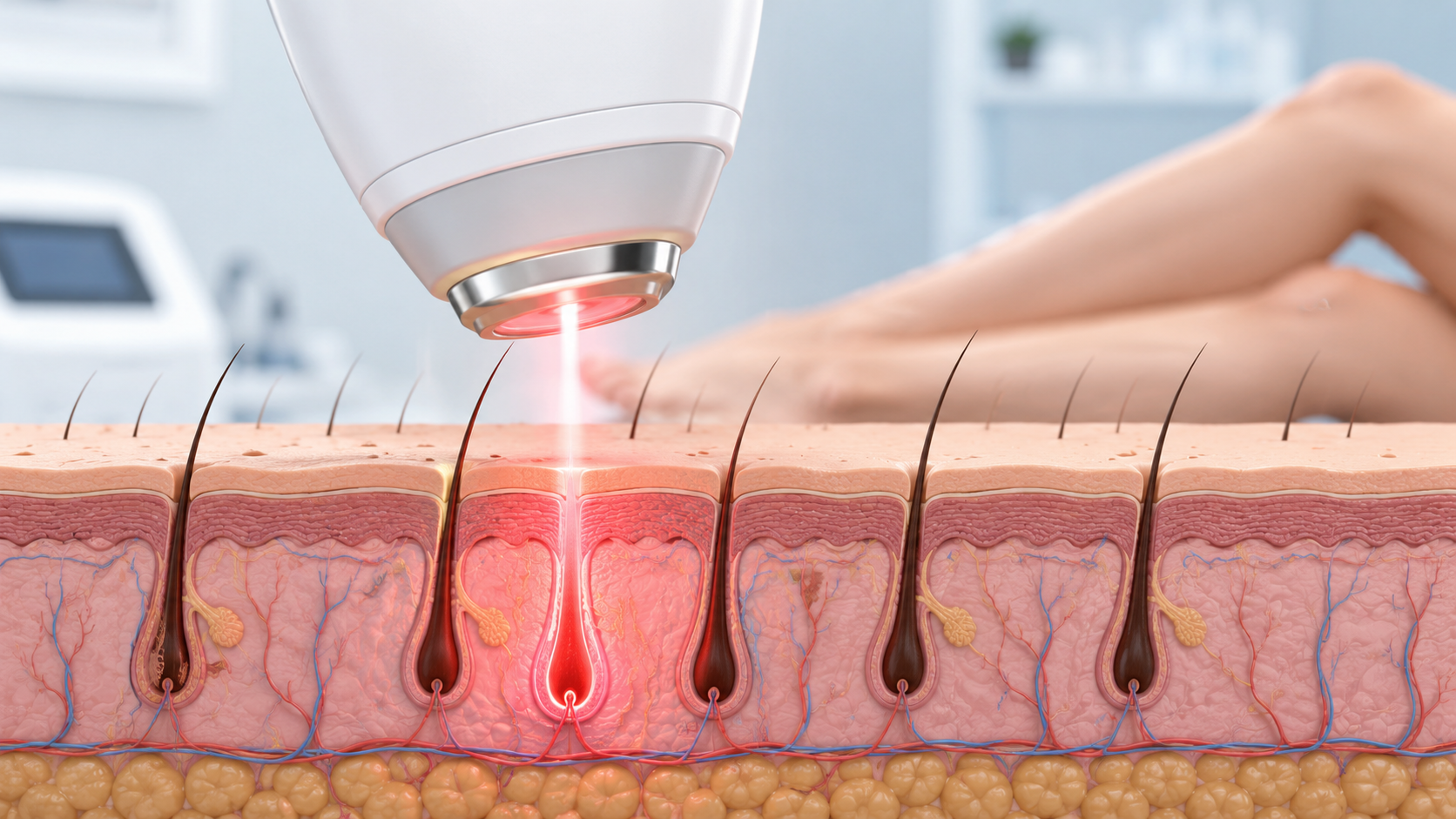
Benefits of Laser Hair Removal for Strawberry Legs
Fading the dots is really just the start. There's a longer list of reasons people end up choosing laser over shaving or waxing for good.
For one, it's actually long-term. Shaving only cuts hair at the surface, so the follicle stays exactly the same width it always was. Laser goes after the root, so the results build up over time instead of vanishing in a day or two, which is honestly the biggest difference between the two.
It also cuts down on ingrown hairs. A lot of what makes strawberry legs look worse is that constant cycle of nicking, tugging, and re-irritating the same pores through regular shaving. Slow the hair growth down, and that whole cycle starts breaking on its own.
Skin tends to look and feel smoother too, not just visually but to the touch. Once the follicle isn't holding onto thick, dark hair anymore, a lot of the shadowing that makes pores look darker fades right along with it.
There's also the time factor, which people underestimate. Fewer shaving sessions, fewer razors to keep buying, less thinking about your legs every single morning.
And for many people? For a lot of people, the real win is just not overthinking shorts or swimwear anymore. Many people feel more comfortable wearing shorts, dresses, or swimwear without worrying about the appearance of their legs. Not just how you dress, but how much headspace the whole thing takes up.
How Many Sessions Will You Need?
The number of sessions varies from person to person, so be a little wary of anyone who throws out an exact figure before even looking at your skin.
That said, based on how most people respond, some start noticing real change by session three. Others, especially with thicker or denser hair, need closer to eight or ten sessions before it's fully cleared. Both are completely normal.
The variation mostly comes down to how coarse your hair is, your skin tone, and how consistent you actually are with appointments. Laser works in cycles because it can only target hair that's in its active growth phase, and not all your hair is in that phase at once. Skip sessions or space them too far apart, and progress just slows down.
If there is one thing we can tell you, it is this: If you want results that last, the best thing you can do is stick with your treatment schedule. The results are cumulative, and consistency will be far more important than any one session ever will be.
A lot of people get discouraged after the first or second session because nothing dramatic has happened yet and they just stop going. Usually, it is the worst time to quit, since the real visible change tends to show up in the middle part of treatment, after enough growth cycles have actually been stopped. The difference between people who love their results and people who give up too soon is really being committed to the plan.
Safety and What to Expect During Therapy
Laser on the legs is pretty easy to sit through for most people. Mild redness or some puffiness immediately following a session is perfectly normal and typically subsides within a few hours to a day.
Discomfort is usually minimal with newer machines that have built-in cooling to protect the skin during treatment. It’s not pain-free for everyone, but most say it’s tolerable and frankly, less unpleasant than they expected.
Skin tone is a big factor for laser safety, and that is why the equipment matters. Dual-wavelength lasers such as the Cynosure Elite iQ are designed to safely treat a wide range of skin tones. Good to remember when you're comparing clinics, because not every machine is built the same way.
Aftercare doesn't have to be complicated, but skipping it does make a difference Keep the treated area moisturised, stay out of direct sun for a few days, and hold off on hot showers or intense workouts right after your session. Small steps, but they’re usually the difference between an easy recovery and an irritated one.
What About Keratosis Pilaris?
Since keratosis pilaris and strawberry legs are so often lumped together, it deserves its own answer.
Laser hair removal can really help the appearance of KP-affected skin, mostly because slowing down hair growth calms a lot of the follicle irritation that makes KP stand out in the first place. But KP itself is a condition of its own, associated with keratin buildup rather than just hair, so it doesn’t always follow the rules.
Real-world outcomes tend to bear this out. People see real improvement in texture and pore appearance, but laser alone doesn't clear KP for everyone. "I find pairing treatment with gentle exfoliation and regular moisturising usually gets you the most complete results, rather than expecting laser to do all the work."
Setting that expectation up front just makes the whole experience smoother, with a lot fewer surprises down the road.
Is It Permanent?
Laser gives you a long-lasting reduction, not something that reverses the second you stop the treatment. The majority of people preserve their results with a touch-up session once or twice a year. This is because a small percentage of follicles can lie dormant and wake up later, especially with hormonal changes over time.
But it's about as close to permanent as you get for leg hair removal, compared to shaving or waxing. And because strawberry legs are so intrinsically linked to hair growth to begin with, keeping that reduction consistent is really what keeps the smoother look sticking around long-term.
Frequently Asked Questions
Is laser hair removal painful? Most people find it pretty manageable. It's often described more as a quick warm snap than actual pain, and the cooling built into modern lasers helps keep things comfortable the whole way through.
Is it effective on all skin types? Yes, if the right technology is used. Dual-wavelength systems are designed for the safe and effective treatment of a broad spectrum of skin tones.
Before a session, should I shave or exfoliate? Generally, to make the process as easy as possible, you want to shave beforehand, because it allows the laser to directly target the follicle without extra hair getting in the way. It can also help to exfoliate a day or two before, but it’s worth checking with your provider based on your own skin.
Will dark spots from years of shaving go away as well? And a lot of people see improvement here too, as a lot of that darkening is from irritated, overworked follicles. Hair growth slows and irritation settles down, and skin tone tends to even itself out.
The Bottom line –
Strawberry legs are common, and they’re nothing to worry about. There are things you can do about them. It’s not a one-shot deal, but most people see a real, lasting difference in how their legs look and feel, with the right laser technology and a plan you actually stick to.
If you've been battling those little dark dots and you're ready for a real plan, rather than another round of guessing with razors, we'd love to take a look at your skin and build a treatment plan around your hair type and skin tone. Schedule a consultation with us and let’s determine what your legs actually need.